
Learn first. Rehearse. Then build.
The LMS, the AI simulator and the DIY kits get a learner ready before they touch live equipment. Safety-first training, repeatable practice and documented progress.
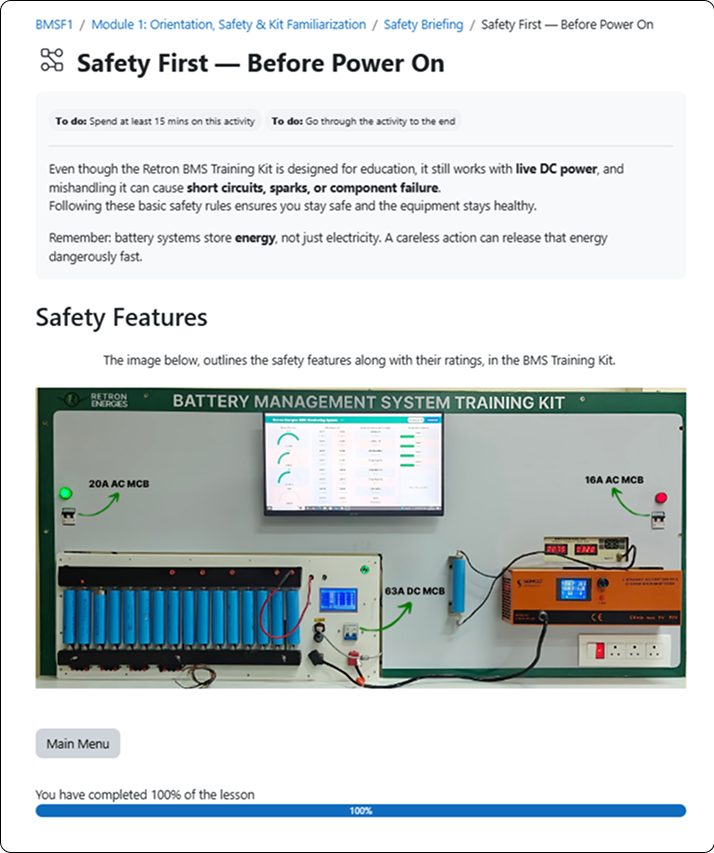
Equipment is only useful if the learner is ready for it.
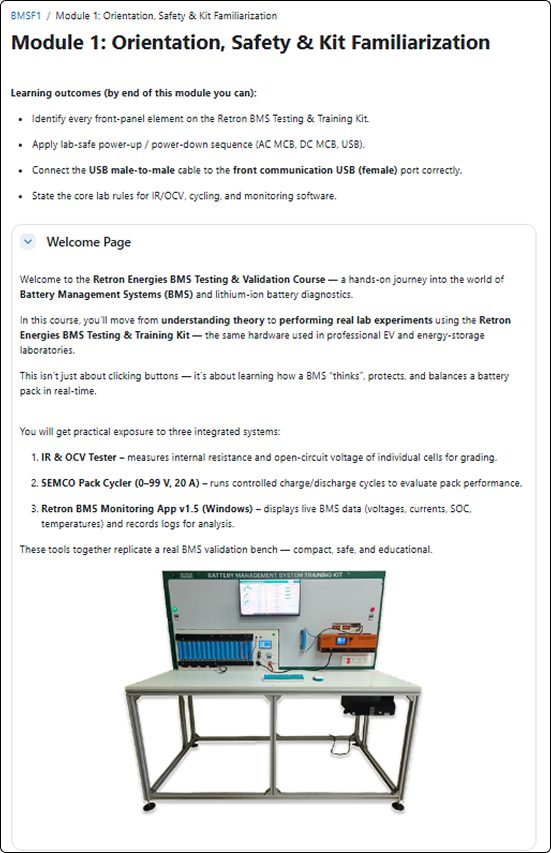
Before anyone works on an experiment, they use the LMS to learn what we are doing, how each machine works, which tools and parts are involved, and the methods and SOPs to follow. Then the AI simulator lets them practise troubleshooting. Only after that do they go to the bench.
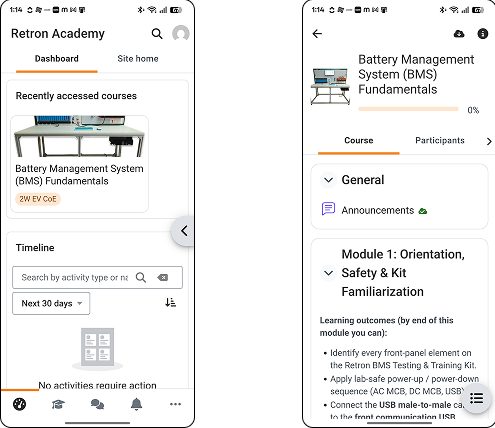
Equipment, tools, methods, SOPs and safety, on desktop or mobile.
Work through case studies and troubleshoot faults without risk.
Run the real experiment on the bench or with a DIY kit.
Progress, logs and reports show what the learner can do.
Purpose: safety-first training before lab work.
The LMS gives every learner the same standard onboarding, so practice is repeatable and documentation is audit-ready.
- On-demand training modules
- Step-by-step equipment operation guides
- Experiment protocols
- Theory fundamentals
- Assessments and quizzes
- Progress tracking and completion status
Practise troubleshooting before you touch the machine.
The simulator turns real faults into case studies. Learners analyse the evidence, form a diagnosis and see how they did. It makes them think through a problem, not just follow steps.
Safe to get wrong
A wrong call in the simulator costs nothing. On live equipment it could cost a pack.
Builds diagnostic thinking
Learners work out how to troubleshoot a scenario and analyse the whole process.
Faster, better lab time
Learners reach the bench knowing what to look for, so experiments teach more.
Scenarios learners work through.
Each case maps to an experiment in one of the other zones.
Pack voltage collapses under load
- Scenario
- A pack reads fine at rest, then voltage sags the moment the load is applied.
- What the learner analyses
- Compare voltage, current and temperature traces; separate a weak cell from a poor connection.
- What they learn
- How to read a sag and trace it to a cause (battery pack testing).
One cell drifts out of balance
- Scenario
- In a 16-cell pack one cell keeps charging faster than the rest.
- What the learner analyses
- Read cell-by-cell voltages and balancing behaviour; decide whether the cell or the BMS is at fault.
- What they learn
- How balancing works and how to confirm it (BMS).
Controller trips on over-current
- Scenario
- The motor controller cuts out during acceleration.
- What the learner analyses
- Study phase current, temperature and throttle together; rule out wiring, load and settings.
- What they learn
- How protection limits behave in a powertrain.
Charging stops halfway
- Scenario
- A charge session ends early without a clear error.
- What the learner analyses
- Follow the charging profile and fault flags; check protection limits and communication loss.
- What they learn
- How a charge cycle and its safeguards should behave (charging emulator).
Intermittent fault in the harness
- Scenario
- A signal drops out now and then, mostly over bumps.
- What the learner analyses
- Use continuity, voltage drop and contact resistance results to find the weak connection.
- What they learn
- Systematic harness fault finding (wiring).
Good cell, poor grade
- Scenario
- A cell passes OCV but fails capacity retention.
- What the learner analyses
- Review its IR, OCV and capacity records; decide the grade and what to do with the cell.
- What they learn
- Why one test is never enough when grading cells.
Curated, project-based experiences with all materials provided for hands-on experiments.
- Step-by-step tutorials inside the LMS
- Real-world industry applications
- Battery, BMS, powertrain, wiring, charging and full-vehicle integration kits
Hands-on practice that follows the lesson.
Kits let learners repeat an experiment on their own, with the LMS tutorial open beside them.
The first module every learner takes.
Indicative curriculum. The final module list is confirmed in your lab proposal.Prerequisites
- No prior experience is needed
- A phone, tablet or computer for the LMS
- Complete Module 1 before the first power-up
- Orientation, safety and kit familiarisationIdentify every front-panel element; safe power-up and power-down; connect the communication cable; core lab rules.
- Equipment and method lessonsHow each machine works, the tools used and the SOPs to follow.
- AI simulator case studiesTroubleshooting scenarios for each zone.
- Experiment protocolsStep-by-step guides for the bench and DIY kits.
- AssessmentsQuizzes and a record of completion.
What learners can do afterwards.
For institutions and for industry.
Colleges and training institutes
- Standard onboarding for every batch
- Faculty spend less time on basics
- Progress records for each student
- Equipment used more, with fewer mistakes
Startups, SMEs and OEM teams
- Upskill technicians on SOPs before they handle live equipment
- Rehearse fault finding with case studies
- Keep audit-ready training records
- Shorter ramp-up for new hires
Ask about the LMS, simulator and kits.
Tell us about your institution or team. We will arrange a demo.